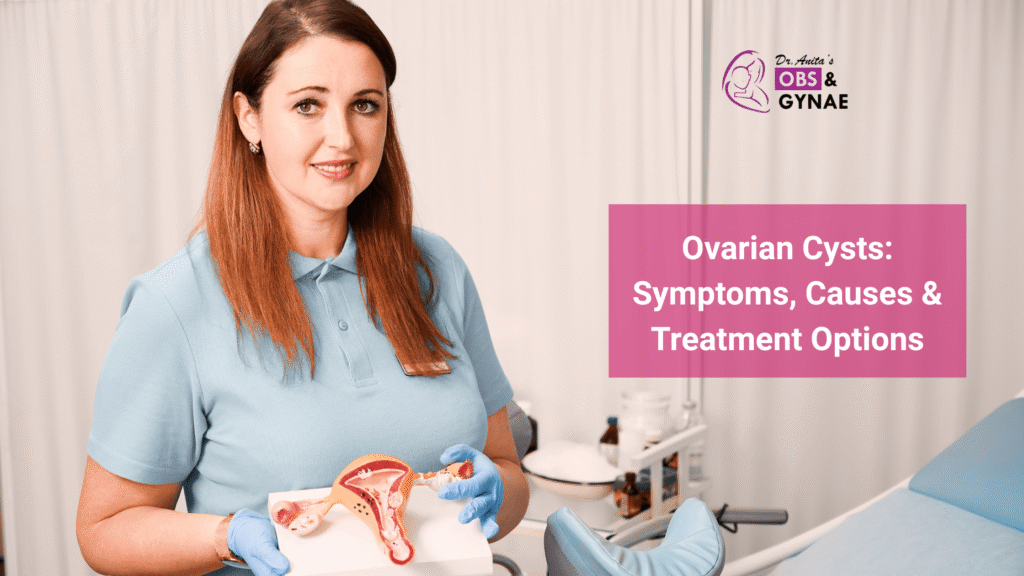
Ovarian cysts are one of the most common gynecological conditions affecting women of all ages, particularly during their reproductive years. An ovarian cyst is a fluid-filled sac that develops on or inside an ovary. While many cysts are harmless and disappear without treatment, some can cause persistent pelvic pain, menstrual irregularities, fertility concerns, or serious complications if left untreated. Early ovarian cyst diagnosis and timely ovarian cyst treatment play an important role in protecting a woman’s reproductive health and preventing complications.
Whether you’re experiencing symptoms or have been diagnosed during a routine examination, understanding ovarian cysts can help you make informed decisions about your health. In this blog, we’ll discuss the symptoms of ovarian cysts, their causes, diagnosis, and the latest ovarian cyst treatment options to help you understand when medical care is needed.
What Are Ovarian Cysts?
An ovarian cyst is a sac filled with fluid or semi-solid material that develops in or on an ovary. Most ovarian cysts are benign (non-cancerous) and occur as part of the normal menstrual cycle. These are known as functional ovarian cysts, and they often disappear naturally within a few weeks or months without requiring treatment.
However, some women develop complex ovarian cysts, which contain solid tissue or blood and may require closer monitoring or treatment. Although most ovarian cysts are not cancerous, persistent or symptomatic cysts should always be evaluated by an experienced gynecologist.
Key Facts About Ovarian Cysts
- Most ovarian cysts are benign and non-cancerous.
- Functional ovarian cysts are the most common type.
- Many cysts disappear without treatment.
- Large or complex ovarian cysts may require medical or surgical treatment.
- Early diagnosis helps reduce the risk of complications and preserves fertility.
Understanding the type of ovarian cyst is essential because it determines whether observation, medication, or ovarian cyst surgery is the most appropriate treatment.
What Are the Common Symptoms of Ovarian Cysts?
Many women with small ovarian cysts experience no symptoms and only discover the condition during a routine pelvic examination or ultrasound. However, larger cysts or complex ovarian cysts can produce noticeable symptoms that should not be ignored.
Common Ovarian Cyst Symptoms
- Persistent pelvic pain or lower abdominal pain
- Bloating or a feeling of abdominal fullness
- Pain during sexual intercourse
- Irregular, heavy, or painful menstrual periods
- Frequent urination due to pressure on the bladder
- Difficulty emptying the bladder completely
- Lower back or thigh pain
- Feeling full quickly while eating
- Difficulty conceiving in some cases
Seek immediate medical attention if you experience sudden, severe pelvic pain, dizziness, fever, vomiting, or heavy vaginal bleeding. These symptoms may indicate a ruptured ovarian cyst or ovarian torsion, both of which require emergency medical care.
Recognizing ovarian cyst symptoms early allows for timely diagnosis and appropriate treatment, reducing the likelihood of long-term complications.
What Causes Ovarian Cysts?
Understanding the causes of ovarian cysts can help women recognize their risk factors and seek timely medical advice. While many cysts develop naturally during ovulation, others are associated with underlying gynecological conditions.
Common Ovarian Cyst Causes
Functional ovarian cysts
- Develop when a follicle does not release an egg or fails to shrink after ovulation.
- These are the most common and usually resolve on their own.
Hormonal imbalances
- Changes in hormone levels or fertility medications can increase the risk of developing ovarian cysts.
Endometriosis
- Women with endometriosis may develop cysts called endometriomas or “chocolate cysts.”
Polycystic Ovary Syndrome (PCOS)
- Although PCOS differs from ovarian cysts, women with PCOS may develop multiple small follicles due to irregular ovulation.
Pregnancy
- Some ovarian cysts develop during early pregnancy and usually disappear naturally as the pregnancy progresses.
Previous ovarian cysts
- Women who have had ovarian cysts before are more likely to develop them again.
Although many ovarian cysts are harmless, persistent pain, increasing cyst size, or recurring symptoms should always be evaluated by a gynecologist for ovarian cysts to determine the most appropriate treatment.
How Are Ovarian Cysts Diagnosed?
Accurate ovarian cyst diagnosis helps determine the type of cyst and whether treatment is necessary. Your gynecologist will recommend investigations based on your symptoms, age, and medical history.
Diagnostic Tests May Includes:
- Detailed medical history and symptom assessment
- Pelvic examination
- Pelvic ultrasound
- Transvaginal ultrasound
- Blood tests, including hormone evaluation when needed
- Pregnancy test (if appropriate)
- CA-125 blood test in selected women to assess the risk of ovarian cancer
- MRI or CT scan in complex cases
These investigations help your doctor distinguish between functional ovarian cysts, complex ovarian cysts, and other gynecological conditions, ensuring that you receive the most appropriate treatment.
How Are Ovarian Cysts Treated?
The most appropriate ovarian cyst treatment depends on the type of cyst, its size, your age, symptoms, and whether you plan to have children in the future. While many functional ovarian cysts resolve naturally without treatment, persistent or symptomatic cysts require medical evaluation.
Common Ovarian Cyst Treatment Options
- Observation: Small, simple, and symptom-free cysts are often monitored with follow-up ultrasounds to ensure they disappear naturally.
- Medications: Pain relievers may help manage discomfort. In some cases, hormonal contraceptives may be recommended to reduce the risk of developing new functional ovarian cysts.
- Laparoscopic Ovarian Cyst Surgery: This minimally invasive procedure is commonly recommended for large, persistent, painful, or complex ovarian cysts. It allows for quicker recovery, smaller incisions, and minimal scarring while preserving healthy ovarian tissue whenever possible.
- Ovarian Cyst Removal (Cystectomy): If the cyst continues to grow, causes severe symptoms, or raises concerns about its nature, your gynecologist may recommend ovarian cyst removal while preserving the ovary whenever feasible.
- Open Surgery (Laparotomy): Reserved for very large cysts or when there is suspicion of ovarian cancer.
The goal of treatment is not only to relieve symptoms but also to protect fertility and support long-term women’s reproductive health.
How Can You Reduce the Risk of Ovarian Cyst Complications?
Although ovarian cysts cannot always be prevented, adopting healthy habits and seeking timely medical care can reduce the risk of complications.
Tips for Maintaining Ovarian Health
- Schedule regular gynecological check-ups.
- Do not ignore persistent pelvic pain, bloating, or irregular periods.
- Maintain a healthy weight through a balanced diet and regular exercise.
- Follow your doctor’s advice regarding follow-up ultrasounds and treatment.
- Take prescribed medications as directed.
- Seek immediate medical attention if you experience sudden, severe pelvic pain or heavy bleeding.
Being aware of your body and seeking early ovarian cyst diagnosis can help prevent complications such as cyst rupture or ovarian torsion.
Why Choose Dr. Anita Singla for Ovarian Cyst Treatment in Indirapuram?
Choosing an experienced ovarian cyst specialist is important for getting the right diagnosis and treatment for your individual needs. Dr. Anita Singla offers comprehensive ovarian cyst treatment in Indirapuram, with a patient-centred approach that focuses on symptom relief, fertility preservation, and long-term reproductive health. As a trusted gynae in Indirapuram, she combines detailed clinical assessment, advanced diagnostic techniques, and evidence-based treatment to help women make informed decisions about their care.
Why Women Trust Dr. Anita Singla
- Expertise in diagnosing and treating functional, benign, and complex ovarian cysts.
- Comprehensive ovarian cyst diagnosis using ultrasound evaluation and detailed clinical assessment.
- Personalized treatment plans based on age, symptoms, cyst type, overall health, and future fertility goals.
- Experience with laparoscopic ovarian cyst surgery and other minimally invasive gynecological procedures when surgery is appropriate.
- Compassionate counselling and clear communication throughout diagnosis, treatment, and follow-up.
- Comprehensive women’s healthcare, from adolescent gynecology and reproductive health to menopause management.
Women from Indirapuram and across Ghaziabad, as well as nearby Noida and Greater Noida, can access personalized gynecological care for ovarian cysts. Dr. Anita Singla focuses on timely evaluation, appropriate treatment, and individualized care to support women’s reproductive and overall health.
Conclusion
Most ovarian cysts are harmless and resolve naturally, but some require timely medical attention to prevent complications and protect fertility. Understanding the symptoms of ovarian cysts, recognizing their causes, and seeking early ovarian cyst diagnosis can make a significant difference in treatment outcomes. Whether your symptoms are mild or severe, consulting an experienced gynecologist ensures you receive the right care at the right time.
If you are experiencing persistent pelvic pain, bloating, irregular periods, or other ovarian cyst symptoms, don’t delay seeking medical advice. Early diagnosis and appropriate ovarian cyst treatment can help relieve symptoms, preserve your reproductive health, and improve your overall quality of life.
Book Your Consultation Today
Looking for expert ovarian cyst treatment in Indirapuram? Dr. Anita Singla offers comprehensive diagnosis and personalized treatment for women in Indirapuram, Ghaziabad, while also serving patients from Noida and Greater Noida. Whether you need medical management or laparoscopic ovarian cyst surgery, you’ll receive compassionate, evidence-based care tailored to your individual needs. Book your consultation today and take the first step toward better reproductive health.
Frequently Asked Questions (FAQs)
1. Can ovarian cysts go away without treatment?
Yes. Many functional ovarian cysts disappear naturally within a few weeks or months and only require observation and follow-up ultrasound scans.
2. Are ovarian cysts always painful?
No. Many women have ovarian cysts without any symptoms. Pain usually occurs when the cyst becomes large, ruptures, or twists (ovarian torsion).
3. Can ovarian cysts affect fertility?
Most ovarian cysts do not affect fertility. However, conditions such as endometriosis, PCOS, or large complex cysts may influence fertility and should be evaluated by a gynecologist.
4. When is laparoscopic ovarian cyst surgery recommended?
Laparoscopic ovarian cyst surgery is usually recommended for persistent, large, painful, or complex cysts that do not resolve with conservative treatment or when there is concern about complications.
5. How are ovarian cysts diagnosed?
Diagnosis usually involves a pelvic examination, pelvic or transvaginal ultrasound, blood tests, and, in selected cases, additional imaging or tumour marker tests.
6. When should I consult a gynecologist for ovarian cyst symptoms?
Consult a gynecologist if you experience persistent pelvic pain, abdominal bloating, irregular periods, pain during intercourse, or sudden severe abdominal pain requiring urgent medical attention.

Need personalised care?
Book a consultation with Dr. Anita Singla in Indirapuram, Ghaziabad.